 Animal friends
I loved Michael Jackson. How could you not? His "Billie Jean" on the Motown 25th Anniversary show was the most riveting thing I've ever seen on TV. When I heard Fred Astaire had called him afteward to congratulate him I said "
Yes!" But long before that, several minutes of the Jackson Five on TV already had a special magic with the little brother a gem of magical energy at the center. Michael was one of the great ones and it was there from the start.
But we all know Michael Jackson was accused of sexual abuse of minors on multiple occasions. He was never found guilty in a court of law and was acquitted of all criminal charges in a 2005 trial, and his estate has consistently denied all allegations. But his relationships with young boys were questionable, to put it mildly, and this is a topic totally avoided in this film, which contents itself more with his odd pets, a giraffe, a llama, and a chimp, and his calling them not pets but his "friends," highlighting that he had no real human friends and lived no normal life, retreating into an imaginary "Neverland" he based on a children's book. Despite its strange and remarkable subject, the film is bland, unsubtle, and indifferently made, though it looks colorful enough and hits conventional biopic beats.
In Antoine Fuqua's film Michael's brilliant talent and superstardom are emphasized, even if we don't feel the full magic of his talent and performances. He is depicted above all as a canny manager of his own career and struggling to wrench the control of it from his father. Part of that shrewd planning perhaps, as seen here, is what made him become, for a while, the most popular and visible personality on the planet, perhaps the first and last real planetary superstar. This film asserts, but fails to convey sufficiently, just how remarkable Michael Jackson was, how magical he was as a performer, songwriter, and singer. Would adding in the harder truths about the man save this picture from its abysmal critical rating (Metacritic 39%)? No, because this is a standard-issue music biopic. Its bland filmmaking isn't worthy of this very special artist.
This is a despised genre to begin with, and is an unremarkable example of it. There have been musical biopics of merit. I liked Curtis Hanson's
8 Mile , about Eminem, who played, once removed because fictionalized, himself. (You could say
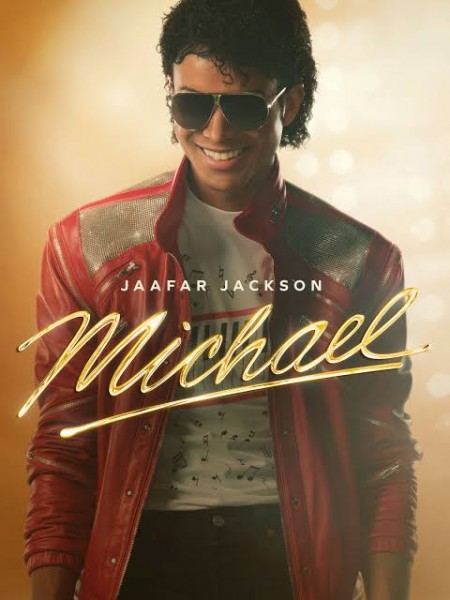
Michael's lead is only once removed from his role, since his nephew Jaafar Jackson plays him. This was a good choice for looks, but not for acting.) Steve Rash's
Buddy Holly Story (1978) had great energy in the lead from Gary Busey. Anton Corbijn's 2007
Control, with the brooding, intense young Sam Riley as the doomed Ian Curtis, was a very cool musical biopic (and in black and white). Sorry, I cannot endorse François Girard's 1993
Thirty Two Short Films About Glenn Gould at all: one film about my pianistic idol would have been too many, and such cuteness is unworthy of a major musical artist.
Bertrand Tavernier gave sophisticated treatment to Bud Powell and Lester Young with
Round Midnight, and a couple years later Clint Eastwood's 1988
Bird about doomed jazz great Charlie Parker, while it wasn't so great, still benefitted from Eastwood's knowledge of the music. That seems unusual. When, in a musical biopic, does one ever learn anything new about the music it's papered with? Eastwood's film also brought us Forest Whitaker, though he may have been more memorable later as Idi Amin in a film with a great title,
The Last King of Scotland. Round Midnight , made by French director Bertrand Tavernier (1986) is about Bud Powell and Lester Young (though the names are changed), and features a real jazz great, Dexter Gordon ("Long tall Dexter") in one of the main roles. Nothing as fortunate as that occurs in
Michael, which is sponsored by the Jackson family despite depicting its members uninterestingly.
One of the most admired examples of the music biopic genre (oddly, if you ask me) is the Mozart drama
Amadeus (1984, Milos Forman). I remember nothing but seeing it with my late friend Isao, and his remarking that the only standout moment was the laugh, and he didn't even like that. The trouble was this was a film version of the 1979 Peter Shaffer stage play, and felt like cardboard and papier maché as a movie. That something so caricatural could be so celebrated is incomprehensible, a sign of how much the public welcomes weird, distorted depictions of creative genius. And then, the absolute favorite musical biopic, according to Metacritic, is
Shine, about the troubled - well, mentally ill - concert pianist David Helfgott, whose feel-good ending points up how often such pictures are corny and trite.
At least in America this is true: there may have been better examples from France, such as
La Môme aka
La Vie En Rose (2007), about Édith Piaf and
Gainsbourg: A Heroic Life (2010) about Serge Gainsbourg. (Come to think of it,
Control, one of the better ones, isn't American, but British).
Michael the film plays a conventional game by featuring a crude bad guy, Joseph, Michael's father, played by Colman Domingo in repulsive prosthetic makeup, almost making him into a monster by sight alone. Joseph beats young Michael hard with a belt early oh and it really hurts, and this serves as the trauma motivating the talented youth's extraordinary drive and achievement, and lasting inner pain. When Michael is grown and serves his father a paper firing him as boss of Michael Jackson, Inc., the man still threatens to "whup" him, but his mother (Nia Long), the opposite extreme, always sweet and supportive, quietly tells Joseph he can't whup nobody no more. Clear enough? But Joseph continues to control Michael Jackson, co-managing his Victory Tour with fight promoter Don King in 1984 when the artist was 25.
A pivotal scene of
Michael is the moment (in early 1983) when the singer and his lawyer/manager John Branca (action star Miles Teller) persuade CBS Records president Walter Yetnikoff (played by Mike Meyers) to threaten to pull their entire roster if MTV doesn't end its racist ban on Jackson and other black artists and play the "Billie Jean" and "Thriller" "short films." (Jackson sought to make art with them, and so called them "films" and not videos.). This scene's artist-asserts-rights-against-businessman trope feels familiar, and is like something in the Queen biopic
Bohemian Rhapsody, and in fact that had the same British producer, Graham King.
Musical biopics thrive on melodrama. That's why the downbeat 1972
Lady Sings the Blues works so well for me. Now there's a great musical artist, Billie Holiday, in whose life everything went wrong. The film's saving grace is a remarkable performance in the lead by Diana Ross.
Michael's tragedy is the terrible accident when the artist's hair caught fire and he suffered third degree burns that nearly cost him his life. The scene showing how much he cared for the other patients in the burn unit and left a legacy of burn care is genuine.
What makes
Michael worth watching are Jaafar Jackson's reproductions of Michael Jackson's stage performances. He duplicates intricate dance moves with the same sharpness (amost, anyway) as the gifted original. But what does that make this but an unusually good tribute band, an act of mimicry? This time unlike with
Control, it's not accompanied by original filmmaking.
The film ends with Michael's farewell performance with the brothers band his father controlled and his declaring his independence as a future solo performer. While it's great when a musical biopic doesn't drag us through the whole life but focuses on a key period - the virtue of
A Complete Unknown with its spotlight on the pivotal years when Bob Dylan became Bob Dylan, it's obvious this film is just chickening out, not being selective, just stopping before the dubious behavior became too evident to ignore. Making an honest Michael Jackson musical biopic is a tough job, and Antoine Fuqua didn't manage to do it.
Michael, 127 mins., held its world premiere at the Uber Eats Music Hall in Berlin on Apr. 10, 2026, with a Los Angeles premiere Apr. 20, and US theatrical release Apr. 24.
Metacritic rating: 39%.



 FAQ
FAQ Search
 Login
Login
