 DEVON DELMAR, JASON JACOBS: VARIATIONS ON A THEME - NEW DIRECTORS/NEW FILMS 2026TRAILERMEET THE FILMMAKERSBright sadness
The northern part of Black South Africa, where they speak Afrikaans, is the setting for this, Delmar and Jacobs' second feature of the type. Their first, the 2024
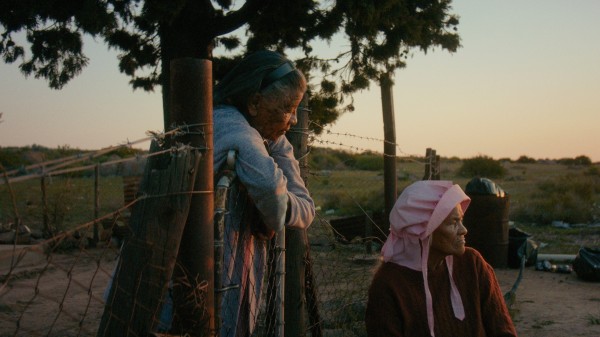
Carissa, focused on a young "Coloured" (mixed-race) woman deciding where she wants to work. This one revolves mainly around Hettie (the gnarly, venerable Hettie Farmer), a goatherd and widow approaching her eightieth birthday. Long having lived alone, she likes it, and her inner monologue enlarged by the soft voice of Jason Jacobs, Farmer's real-life grandson leads us to wonder how it will be to give this up and have to live with some of her many noisy offspring, who come to visit for a while for that birthday and invade her home in great numbers. This is about Hettie, but also very much an ensemble piece, a collection of linked short stories about village life.
Afrikaans is a West Germanic language spoken also in other parts of Africa and even Argentina, evolved from the Dutch settlers and enslaved population in the 17th and 18th centuries. We don't get to hear it very often and its lilt at first reminded me of the Middle English of Chaucer.
The other special thing about this film other than the people themselves, the majority of whom are actual locals, is the high-pitched painterly look of the images using wide screen lenses that actually make what's on screen to look like paintings sometimes. The dp working with Delmar and Jacobs for the second time here is South African local Gray Kotzé, who has an eye for the South African landscape and community life, which the
Variety review described as "vivid" and "scruffy" - the scruffy part probably due to the humble tin houses the people live in and the ugly accoutrements of their impoverished surroundings.
Then there is the sadness. Sure, there's a lot of community and life here, but this is an elegy and leave-taking and also a lament and quiet outcry against generations of wrong. The first wrong in the air is to the generation of Hettie's father, who like others was part of a company of Black South Africans sent to fight in World War II between 1940 and 1944. He came back traumatized and silent: he never spoke of the War. He and his comrades' reward for service consisted of a bicycle and a pair of boots. As neighbors say inn the frequent group chats, their white colleagues tended to receive land and livestock with which they could set up a working farm.
Well, Hettie has her two sturdy donkeys and her herd of sheep she takes to the kraal each day, and sits pondering whether they think of her and if so if she is a mother to them or perhaps a god. She has come to relish the peacefulness and solitude of her life.
But now a cruel new depredation is afoot that the locals are unaware of. There is a company carrying out a scam against them, promising to arrange government reparations for the local families of Black WWII veterans. First, they must fill out elaborate "blue" forms, and then pay a fee. The thought does arise that this is unlikely, after so long, and the question about why you'd have to pay money to receive money. Nonetheless Hettie and her neighbors believe in this scam. They have never had money and they want to dream of having it.
One has his eye on traveling to Las Vegas and gambling, a place, another says, inhabited by zombies. A hairdresser is so enthusiastic and convinced he buys a whole array of new equipment on credit, planning to pay it off when the government reparation is distributed. Meanwhile, among the variations on a theme is the man who is excavating the land under his house's living room in search of diamonds, using an incongruously loud, raucous cranked-up recording of the Choral finale of Beethoven's Ninth Symphony to cover the sound of the digging. The "Ode to Joy" to hide the noise of foolish greed.
Even if it's not a little funny, it's hard not to see all this as very sad despite the rich, bright hues of Gray Kotzé's handsome on screen images. It's hard to know otherwise what to make of this film, but there is an assurance about it and a special vision that explain the top prize it won at Rotterdam this year. As often happens with New Directors/New Films series, Delmar and Jacobs'
Variations is actually something strange and new.
Variations on a Theme/Variasies op 'n tema, 65 mins., premiered at Rotterdam Feb. 1, 2026, winning the Tiger award. It will show at Hong Kong in April. It was screened for this review as part of New Directors/New Films. Showtimes:
Sat, April 18 - 8:00 PM MoMA Titus 2
Q&A with Devon Delmar and Jason Jacobs
Sun, April 19 - 1:30 PM Walter Reade Theater
Q&A with Devon Delmar and Jason Jacobs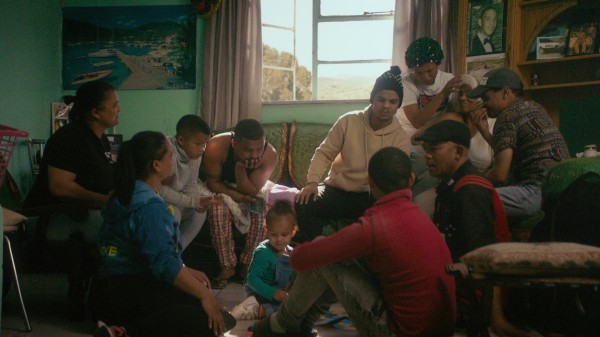



 FAQ
FAQ Search
 Login
Login
